
EURUSD
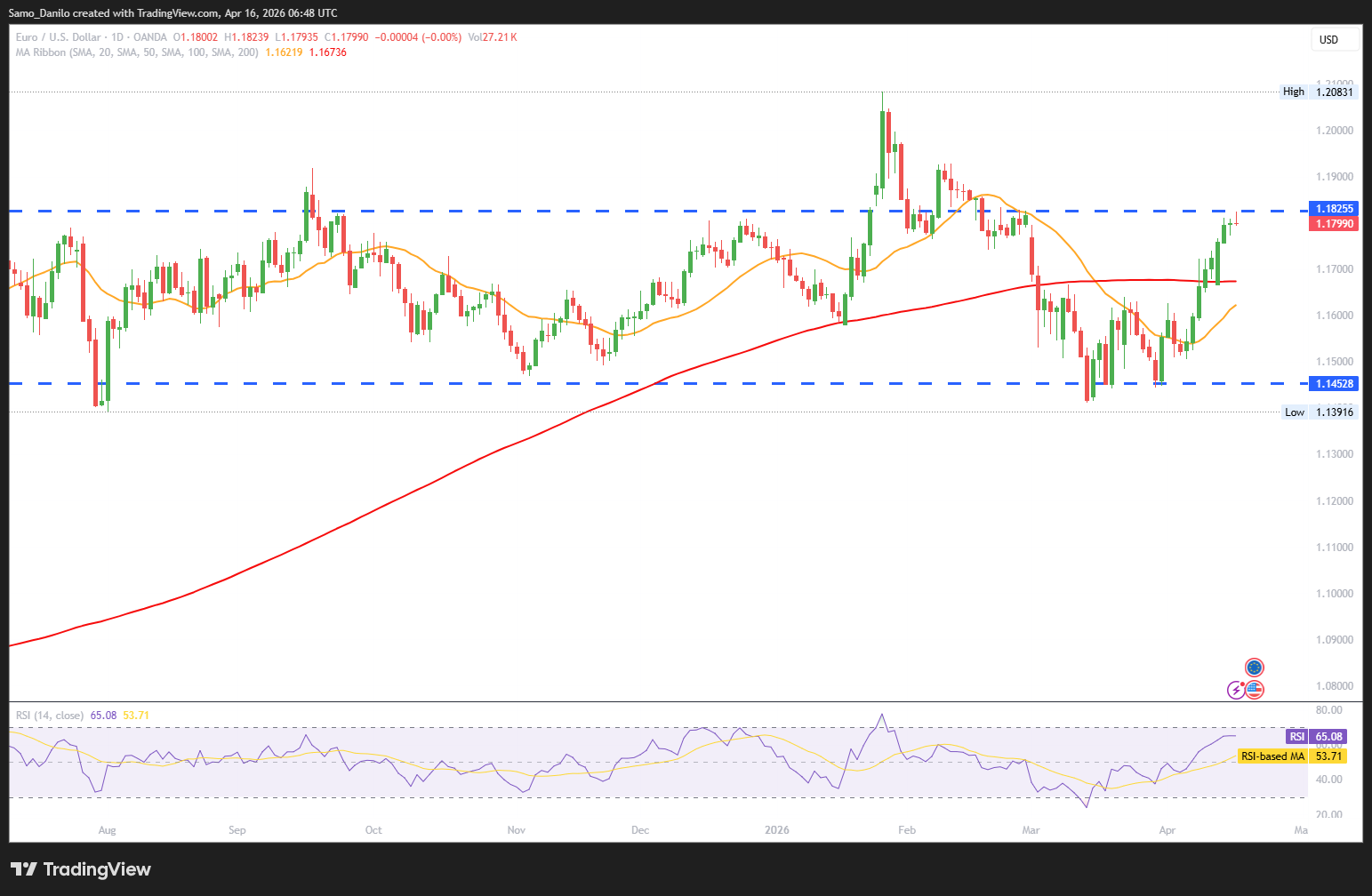
- EUR/USD Price: EUR/USD is holding near the 1.1800 level, reversing earlier gains as the US Dollar’s decline pauses. This indicates a lack of strong directional conviction, with the pair remaining in a consolidation phase.
- Geopolitical developments: Reports from the Associated Press suggest progress toward renewed talks and a potential ceasefire between the United States and Iran. While tensions persist around the Strait of Hormuz, improving diplomatic prospects are supporting broader market sentiment.
- ECB policy: Markets are increasingly expecting the European Central Bank to keep interest rates unchanged at the upcoming April meeting. This reflects a more cautious stance from policymakers following prior tightening efforts.
- ECB's Lagarde: ECB President Christine Lagarde emphasized the need for agility in monetary policy while clearly stating there is no inherent bias toward further rate hikes. This communication suggests a data-dependent approach rather than a predefined policy path.
- Inflation data: Final March inflation figures for the Eurozone are expected to confirm preliminary estimates, providing no major surprises. Stable inflation data reinforces expectations of a pause in ECB policy action in the near term.
| SMA (20) | Slightly Falling |  |
|
| RSI (14) | Rising |  | |
| MACD (12, 26, 9) | Rising | | |
Closing statement: EUR/USD remains range-bound as ECB policy caution offsets improving risk sentiment and a stabilizing USD. Near-term movement will likely depend on fresh macroeconomic data and any shifts in central bank expectations, with limited upside unless a clear policy divergence emerges.
GBPUSD
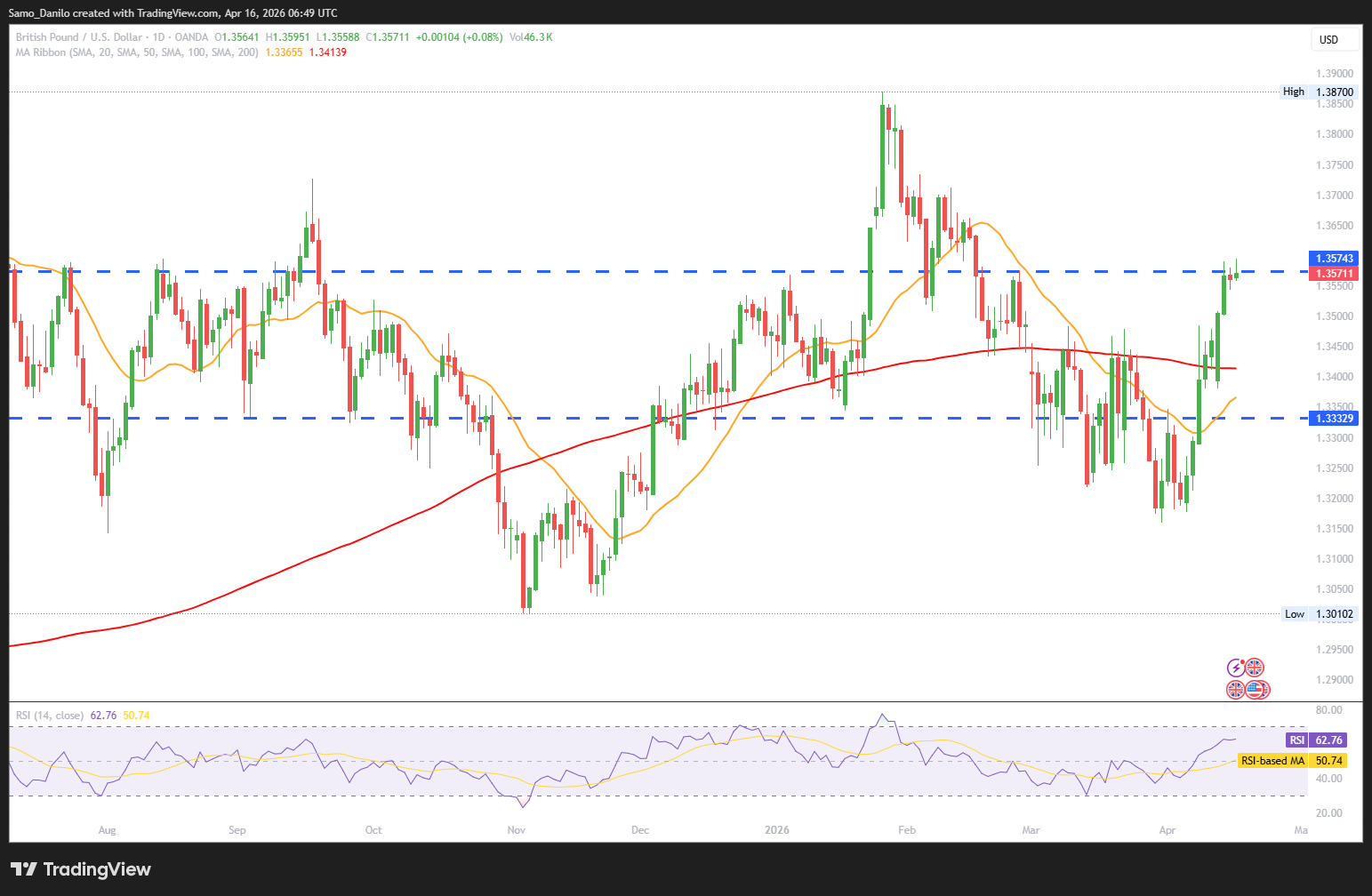
- GBP/USD Price: GBP/USD has recovered from the previous session’s losses and is trading near 1.3570, indicating renewed buying interest.
- UK GDP: The latest data from the Office for National Statistics showed UK GDP expanding by 0.5% MoM in February, a notable improvement from January’s stagnation. This stronger growth print contrasts with more modest long-term projections and highlights near-term economic resilience.
- Industrial data: UK Industrial Production increased by 0.5% MoM, signaling strength in the broader industrial sector. However, the decline in Manufacturing Production by 0.1% points to uneven performance within the economy, suggesting underlying structural challenges.
- Trump's statements: US President Donald Trump stated that the war was “close to over.” Reports, including those from Bloomberg, indicated speculation about a possible two-week extension of a ceasefire, although Trump dismissed the necessity of such a move, citing ongoing negotiations aimed at ending the conflict.
- IMF meeting: Investors are closely monitoring the meeting between Rachel Reeves and Scott Bessent during the IMF-World Bank Spring Meetings. The discussions may provide insights into future economic cooperation and policy alignment between the UK and US.
| SMA (20) | Slightly Falling | |
|
| RSI (14) | Rising | | |
| MACD (12, 26, 9) | Rising | | |
Closing statement: GBP/USD is supported by stronger UK economic data and improved risk sentiment, though mixed domestic indicators and external uncertainties persist. Near-term direction will likely depend on macro developments and signals from key policy discussions, with a cautiously constructive outlook.
XAUUSD
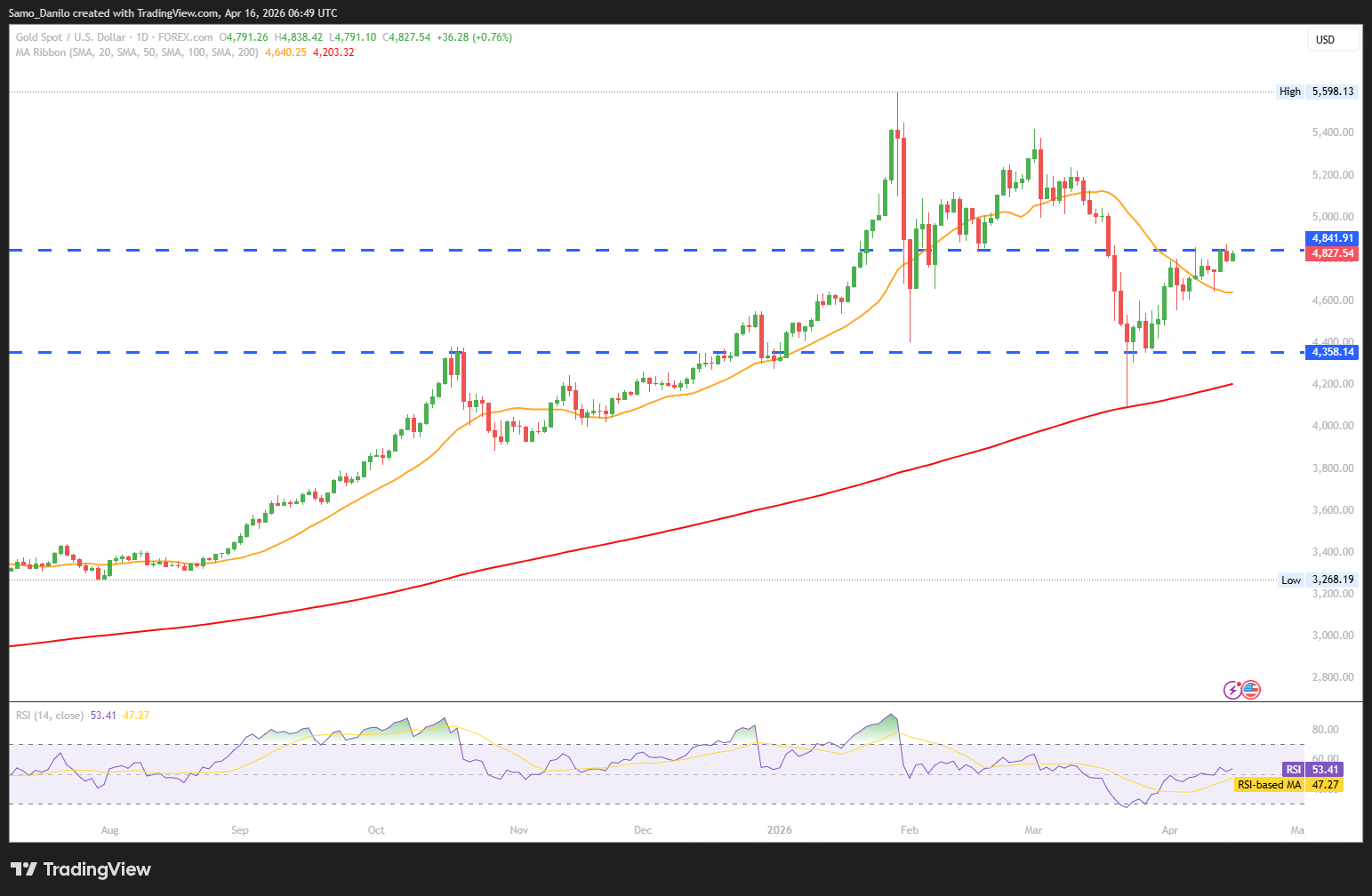
- XAU/USD Price: Gold maintains a positive bias and is trading around $4,815, remaining close to its recent four-week high. This indicates continued bullish sentiment, with buyers still active despite limited follow-through momentum.
- Beige Book: The Federal Reserve Beige Book points to moderate economic activity, while the latest PPI data rising to 4% highlights persistent inflationary pressures. Together, these signals reinforce expectations of a cautious and measured policy stance moving forward.
- Fed's Musalem: Alberto Musalem noted that elevated oil prices could feed into core inflation, keeping it near the 3% level. This underscores the importance of energy markets in shaping the broader inflation outlook.
- Fed leadership: The upcoming Senate hearing for Kevin Warsh introduces an element of political uncertainty regarding future Fed leadership. Ongoing opposition from Thom Tillis and issues surrounding Jerome Powell add complexity to the policy outlook.
- China’s economy: China released its monthly batch of data overnight, which continued to show a two-speed economy with weak consumer demand and strong exports/production. GDP increased 5.0% y/y in Q1 above expectations of 4.8% y/y, and industrial production beat expectations at 5.7% y/y (cons: 5.3% y/y) lifted by strong export growth.
| SMA (20) | Slightly Falling | |
| RSI (14) | Slightly Rising | |
| MACD (12, 26, 9) | Slightly Falling | |
Closing statement: Gold remains supported by persistent inflation concerns and policy uncertainty, holding near recent highs. The outlook suggests continued upside bias, though further gains may depend on inflation trends, Fed signals, and global economic stability.
CRUDE OIL
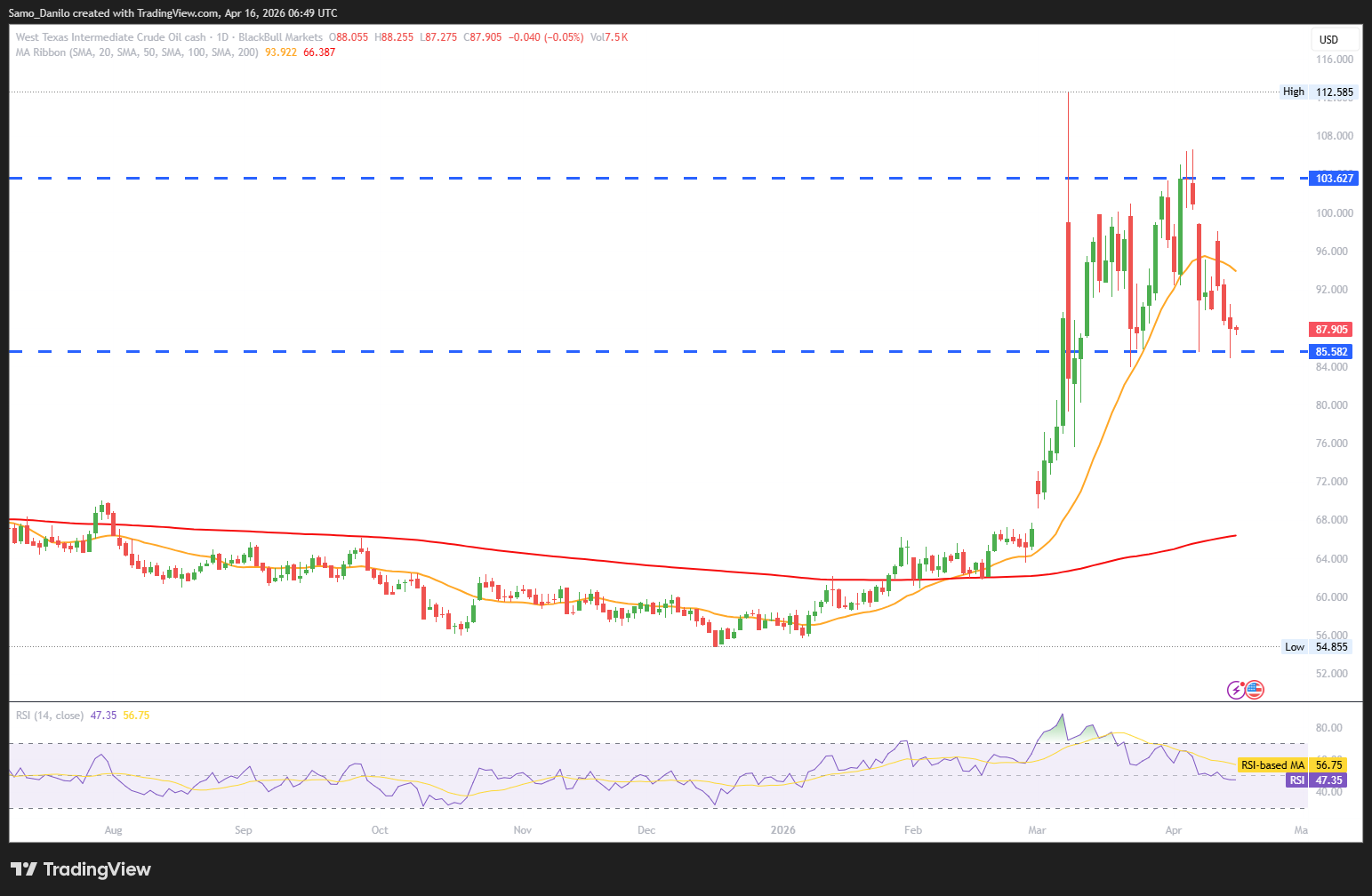
- Crude Oil Price: WTI crude oil is holding around $88.00 in early European trading, indicating relative stability despite intensifying geopolitical tensions. This suggests the market is already pricing in a significant portion of current supply risks.
- Naval blockade: The United States has fully implemented a naval blockade of Iranian ports, prompting strong retaliatory rhetoric from Iran. Threats to halt trade across the Gulf region significantly raise the risk of broader supply disruptions in one of the world’s most critical oil corridors.
- Netanyahu's statement: Israel's Prime Minister, Benjamin Netanyahu, indicated that he had not committed to a ceasefire and said that he instructed the IDF to continue thickening the security zone.
- Strait of Hormuz: The International Energy Agency emphasized that restoring flows through the Strait of Hormuz is the key factor for easing global energy pressures. The ongoing disruption of this vital chokepoint remains central to both price dynamics and supply security.
- Norway revenues: Norway reported a sharp 67.9% year-on-year increase in crude export revenues, driven by elevated global oil prices. This highlights how supply shocks are benefiting major exporters while signaling tight global supply conditions.
| SMA (20) | Rising | | |
| RSI (14) | Slightly Falling | |
|
| MACD (12, 26, 9) | Slightly Rising | |
Closing statement: Crude oil remains supported by severe geopolitical risks and supply disruptions, particularly around the Strait of Hormuz. The outlook stays bullish in the near term, with prices likely to remain elevated unless there is a clear de-escalation or restoration of key supply routes.
DAX
- DAX 40 Price: The DAX is trading around 0.4% higher near 24,160 points, reflecting a positive start to the European session. This upward movement suggests continued resilience, supported by favorable global equity sentiment.
- US equity markets: Gains in US indices such as the S&P 500 and Nasdaq 100, both reaching record highs, are providing tailwinds for European equities. This highlights the strong correlation and influence of US market performance on the DAX.
- US industrial outlook: Upcoming US industrial and manufacturing production data are expected to show a slight slowdown, with growth forecasted at +0.1% MoM. This moderation could signal cooling momentum in the US economy, which is relevant for export-oriented German companies.
- Climate risk: An analysis by Allianz indicates that German firms are disproportionately affected by hail-related damages. This highlights rising climate-related risks and potential cost pressures for businesses operating within Germany.
- BMW rating: BMW remains positively rated by Deutsche Bank, maintaining a “Buy” recommendation with a €100 target price. This reflects confidence in the company’s fundamentals and outlook, supporting sentiment within the DAX’s key automotive segment.
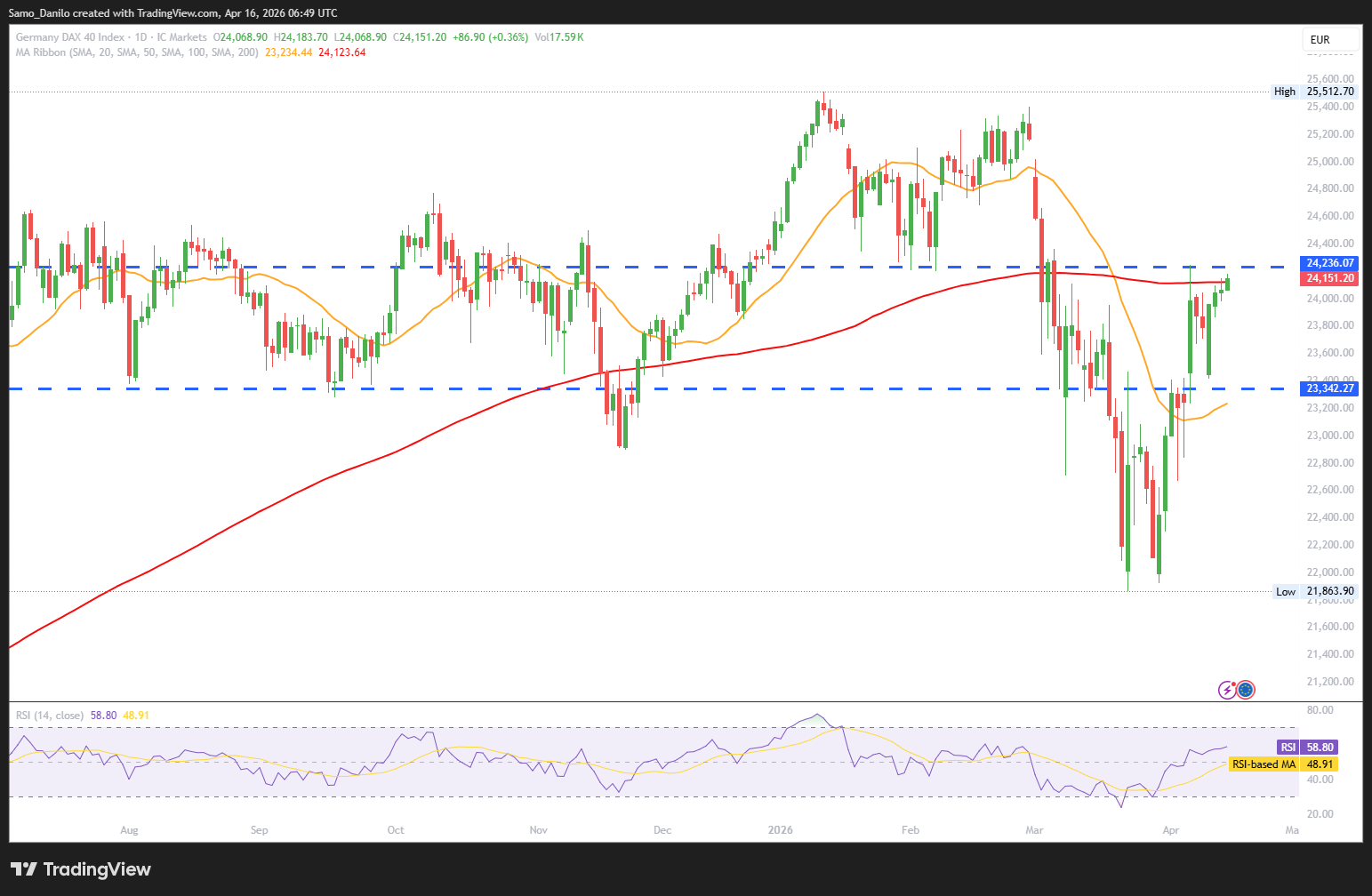
| SMA (20) | Falling | | |
| RSI (14) | Rising | | |
| MACD (12, 26, 9) | Slightly Rising | |
Closing statement: The DAX is benefiting from strong global equity momentum, particularly from the US, while domestic factors remain mixed. The near-term outlook appears cautiously positive, with upside potential supported by external markets but tempered by macro and structural risks.