
EURUSD
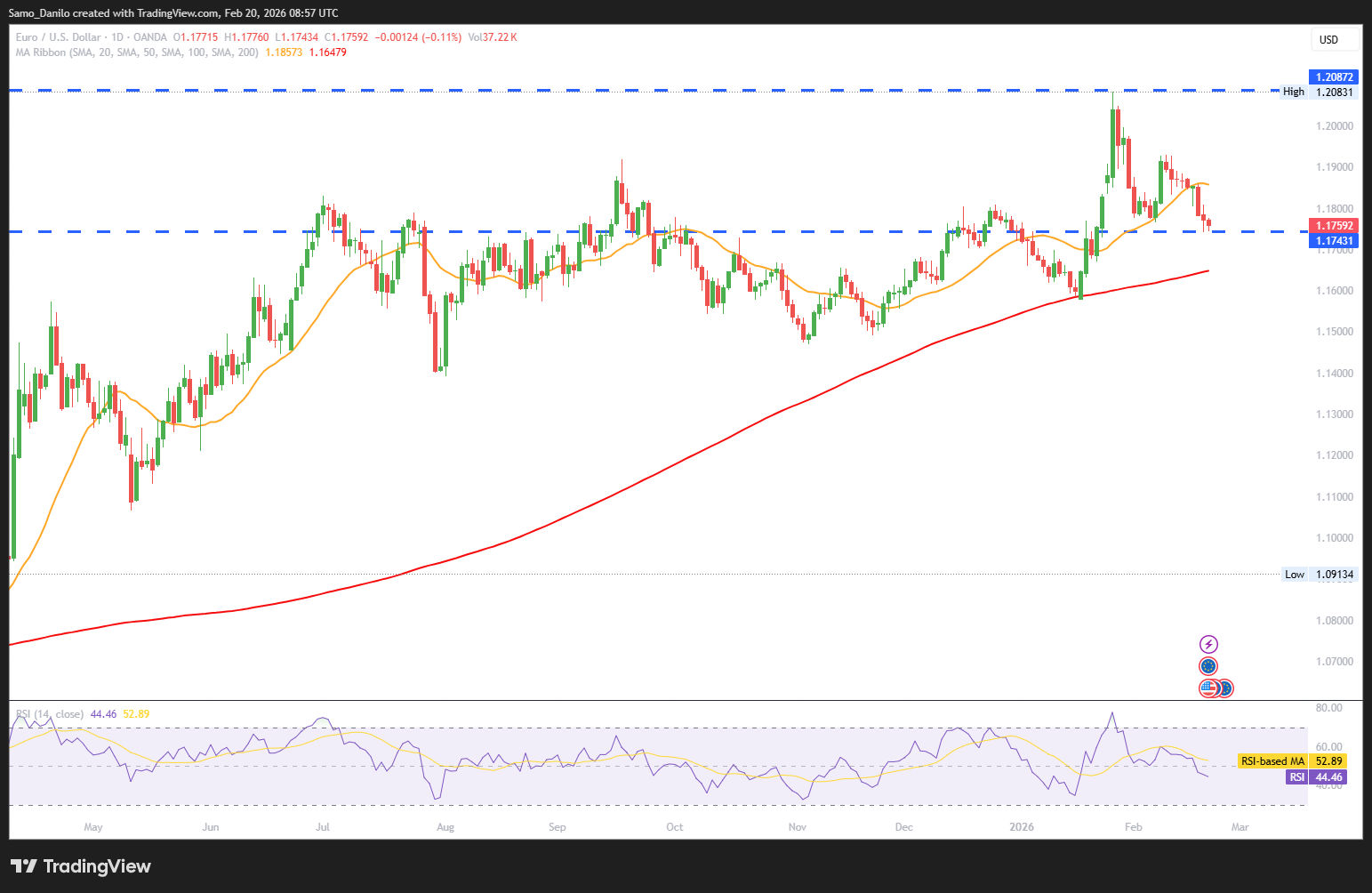
- EUR/USD Price: EUR/USD stays under pressure through the European session on Friday, trading just above the mid-1.1700s, and remains close to a near one-month low set in the previous session amid persistent US Dollar demand.
- Lagarde news: Reuters reports that Christine Lagarde privately told colleagues she remains fully focused on her role, helping to cool speculation about an early departure and limiting additional downside pressure on the euro.
- US labor: The US Department of Labor reported that Initial Jobless Claims fell to 206K for the week ending February 14, well below expectations (225K) and down from the prior revised 229K—reinforcing the narrative of a resilient US labor market and supporting the USD.
- Eurozone data: The HCOB February flash Services PMI printed 51.8 vs 51.9 expected, while manufacturing rebounded to a 44-month high, led largely by improving conditions in Germany.
- Wage growth: The ECB releases its negotiated wages indicator for 2025 Q4, offering an early read on collectively bargained wage pressures—though it captures only part of overall wage dynamics.
| SMA (20) | Rising |  | |
| RSI (14) | Slightly Falling |  |
|
| MACD (12, 26, 9) | Slightly Rising | |
Closing statement: EUR/USD remains biased to the downside, with firm US labor data underpinning the dollar. Near-term direction hinges on PMI surprises and wage signals, which could either validate ECB caution or provide the euro with a temporary floor.
GBPUSD
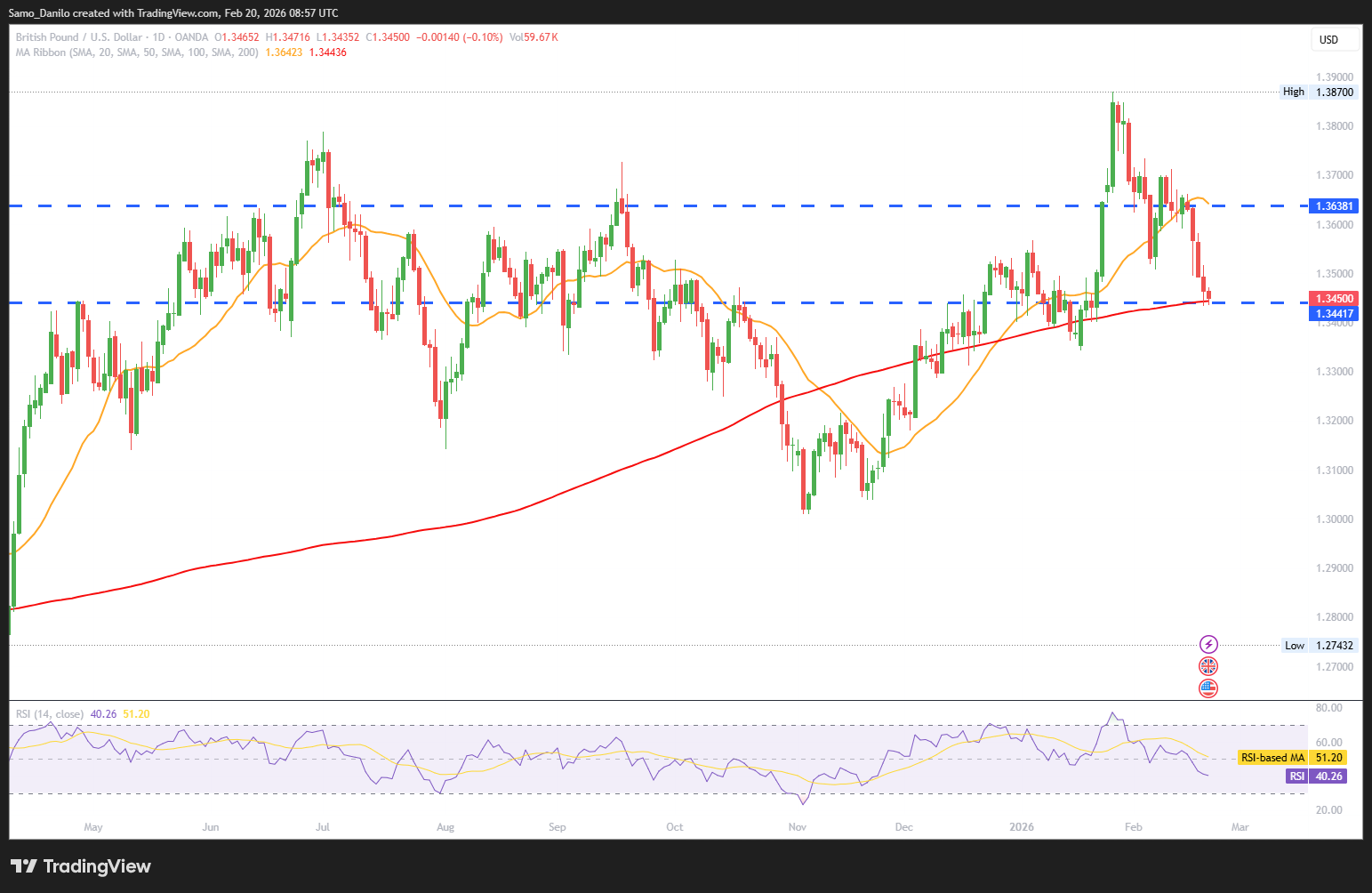
- GBP/USD Price: GBP/USD extends its weekly downtrend for a fifth straight session on Friday, slipping back toward a near one-month low set in the previous session as broad USD strength continues to dominate price action.
- UK data: Figures from the Office for National Statistics showed Retail Sales surged 1.8% MoM in January, sharply outperforming expectations of a 0.2% rise and rebounding strongly from the prior 0.4% increase—offering some fundamental support to the pound.
- BoE signals: Catherine Mann noted that the rising unemployment rate is a growing concern, adding that the UK is approaching a point where monetary policy is more evenly balanced between inflation control and full employment, comments that lean mildly dovish.
- Fed's Kashkari: Neel Kashkari said the US labor market is softer but still “decent to pretty good,” stressing that the Fed is close to achieving both mandates. His remarks reinforce expectations for patience on rate cuts.
- US data: The Federal Reserve Bank of Philadelphia Manufacturing Index jumped to 16.3 in February, beating forecasts of 8.5 and rising from 12.6—adding further support to the USD.
| SMA (20) | Rising | | |
| RSI (14) | Falling | | |
| MACD (12, 26, 9) | Slightly Falling | |
Closing statement: Despite a strong UK Retail Sales print, GBP/USD remains under pressure as firm US data and cautious BoE messaging tilt the balance in favor of the dollar. Sustained recovery in the pair likely requires either a shift in Fed expectations or clearer signs of resilience in UK labor and growth data.
XAUUSD
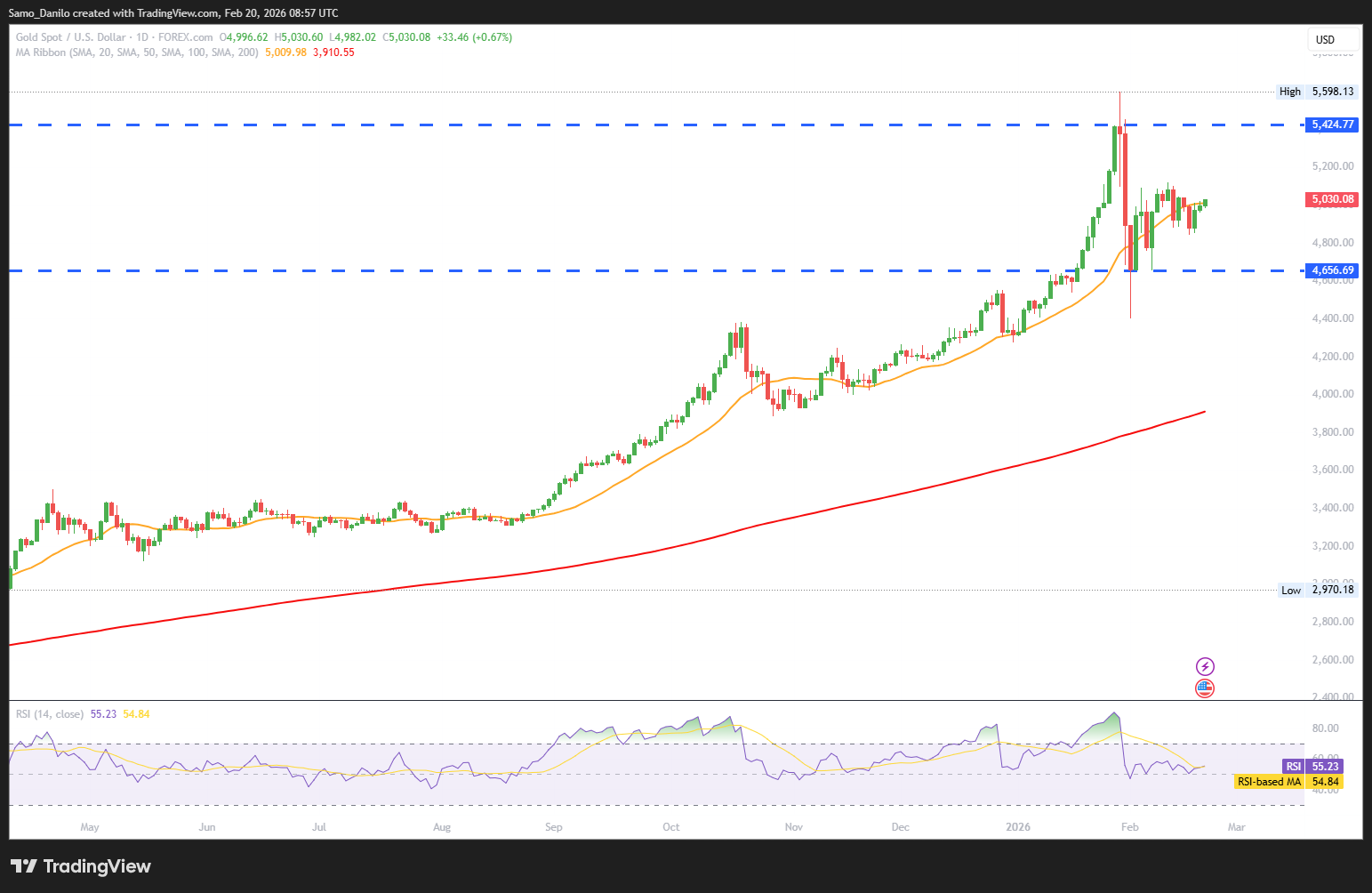
- XAU/USD Price: Gold (XAU/USD) holds on to recent gains near the $5,000 psychological level early Friday, as traders remain sidelined ahead of high-impact US macro releases later in the session.
- US trade: The US Goods and Services Trade Balance widened sharply to -$70.3bn in December, well beyond expectations of a -$55.5bn deficit and worse than November’s -$53bn, highlighting softer external demand dynamics for the US economy.
- Geopolitical risk: The United States has deployed substantial military assets to the Middle East, including aircraft carriers, warships, and air-defense systems, amid rising tensions with Iran, a backdrop that continues to underpin safe-haven demand for gold.
- US data: The Federal Reserve Bank of Philadelphia Business Outlook Index jumped to 16.3 vs 7.5 expected, though New Orders slipped to 11.7 from 14.4, while Prices Paid eased notably to 38.9 from 46.9, hinting at cooling input cost pressures.
- Fed's Miran: Miran, a known dovish dissenter, said he now sees a less accommodative rate path, citing a more resilient labor market and stubborn goods inflation, according to Wall Street Journal.
| SMA (20) | Rising | | |
| RSI (14) | Slightly Rising | |
|
| MACD (12, 26, 9) | Slightly Rising | |
Closing statement: Gold remains supported near record territory by geopolitical tensions and lingering macro uncertainty, though firmer US data and a subtly hawkish Fed narrative are capping upside momentum. A decisive break from the $5,000 area likely hinges on upcoming US inflation and policy signals.
CRUDE OIL
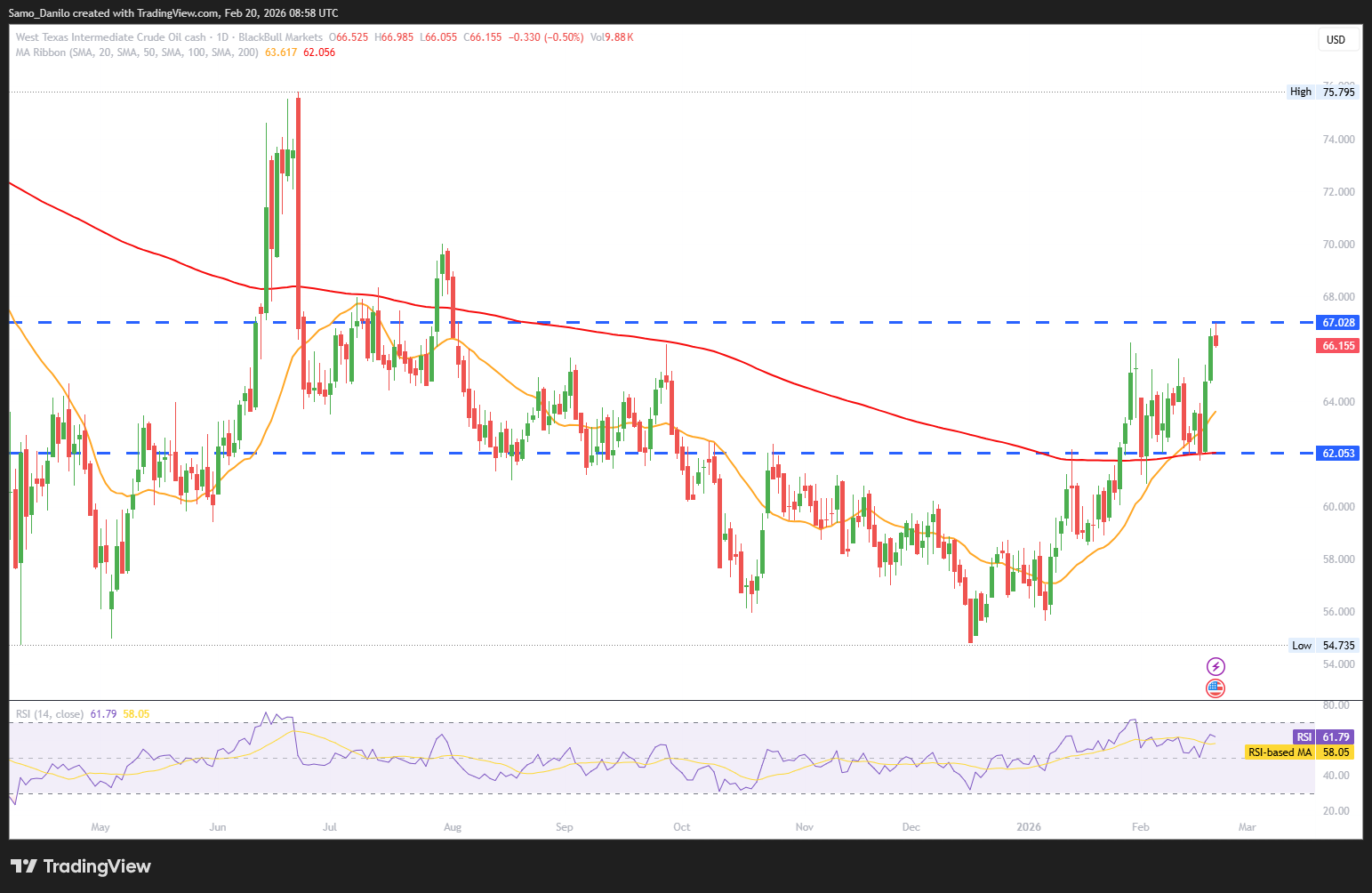
- Crude Oil Price: West Texas Intermediate (WTI) crude is trading around $66 per barrel on Thursday European hours, pointing to its first weekly increase after three consecutive weekly losses as geopolitical risk premiums lift energy markets.
- US‑Iran tensions: Geopolitical tensions remain a key driver, with Donald Trump warning over the next 10–15 days that a deal with Iran must be secured, or military action could follow. This continued standoff supports oil’s risk premium and keeps traders focused on supply disruption fears.
- Iran's response: Tehran told UN's António Guterres it does not seek war but will defend against aggression, saying bases and assets of hostile forces would be legitimate targets if attacked. This rhetoric reinforces uncertainty around future crude flows through critical Middle East routes.
- Shell Venezuela: Shell plans to move forward with a natural gas project in Venezuela following the US government’s issuance of general licenses for energy firms to invest there. Shell’s spokesperson described the step as a “positive signal,” enabling progress on its Dragon project, a sign of shifting supply dynamics as Venezuela reenters Western investment flows.
- Cost cutting: Lukoil Neftohim Burgas has saved $8 million in two months after dropping its Swiss trading intermediary Litasco SA, mainly by eliminating commission fees previously paid between the refinery and its crude reserves, according to Novinite.
| SMA (20) | Rising | | |
| RSI (14) | Rising | | |
| MACD (12, 26, 9) | Rising | | |
Closing statement: WTI’s recent rebound signals a shift from purely bearish consolidation toward a geopolitically supported rally, driven by renewed US‑Iran tensions and military posturing. Although global fundamentals still show ample supply, the geopolitical risk premium has returned strongly, keeping crude prices well supported near multi‑month highs.
DAX
- DAX Price: The German DAX advanced further on Friday morning, currently trading around 25,070 points, keeping pace with European peers and signaling resilient investor sentiment ahead of key macro releases.
- PPI data: Germany’s January PPI came in at -0.6% m/m, versus +0.3% expected, mainly reflecting base effects from energy prices. On a yearly basis, the PPI is 3.0% lower than January 2025, providing limited inflationary pressure but reflecting ongoing cost moderation in German industry.
- Manufacturing PMI: The Germany February flash manufacturing PMI rose to 50.7, exceeding expectations of 49.5 and marking a four-month high. This suggests expansion in business activity and indicates continued stability in the manufacturing sector.
- GDP ourlook: Data so far points to Germany likely achieving visible GDP growth in Q1, barring any unexpected March slump. Optimism among service and manufacturing firms about the next twelve months supports forecasts of annual GDP growth above 1% for 2026.
- Consumer confidence: Euro area February flash consumer confidence increased slightly to -12.2 (Jan: -12.4), its highest level since November 2024, though still below expectations of -11.8, signaling gradual improvement in household sentiment across the region.
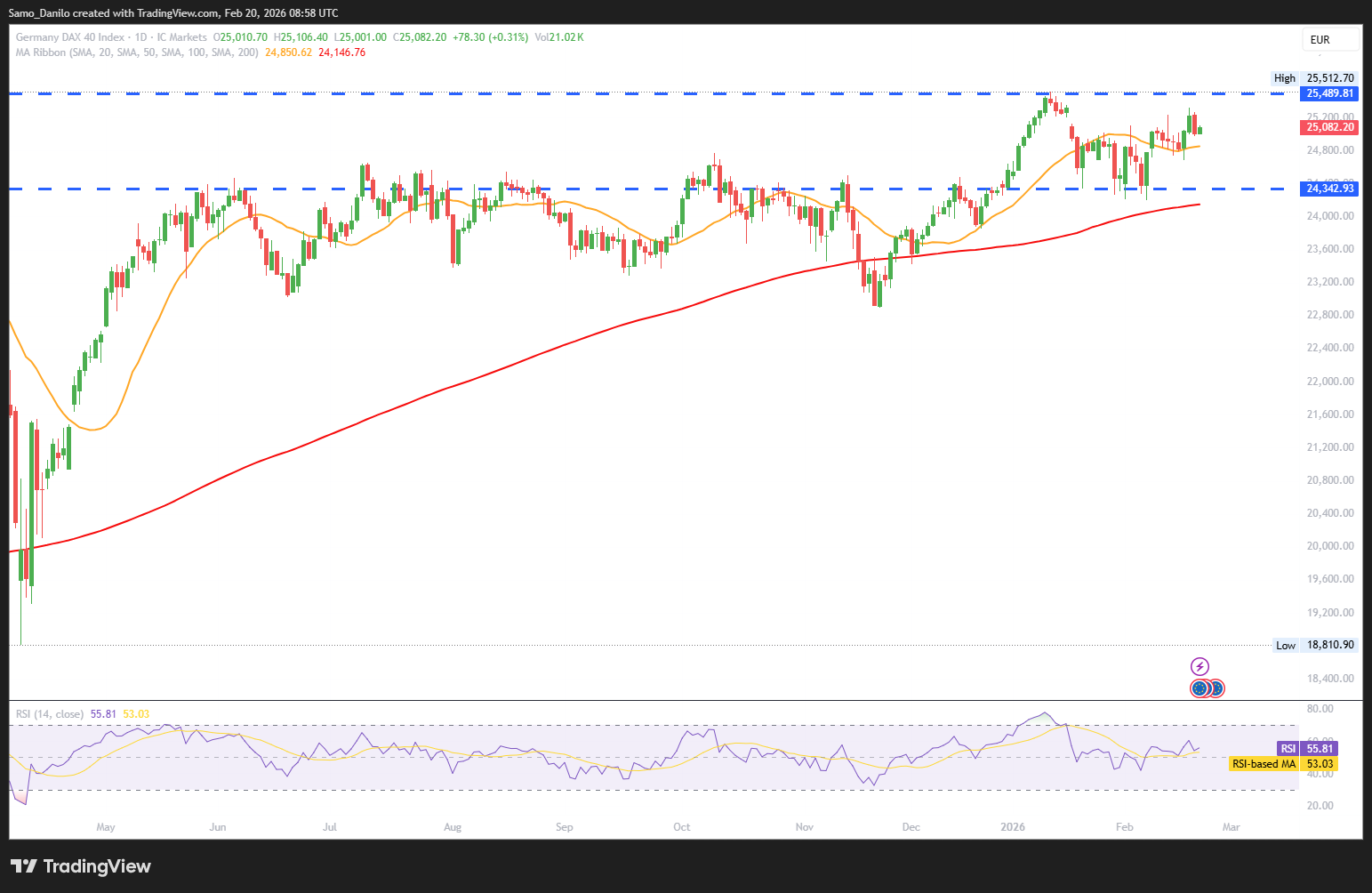
| SMA (20) | Slightly Rising | |
| RSI (14) | Slightly Rising | |
| MACD (12, 26, 9) | Slightly Rising | |
Closing statement: The DAX is showing resilience amid mixed domestic data, with manufacturing and GDP outlooks supporting a cautiously bullish stance. Soft PPI readings limit inflation concerns, while rising confidence indicators could encourage further gains. Unless external shocks intervene, the index may hover near 25,000–25,100 and test higher resistance toward mid-January levels in the short term.