
EURUSD
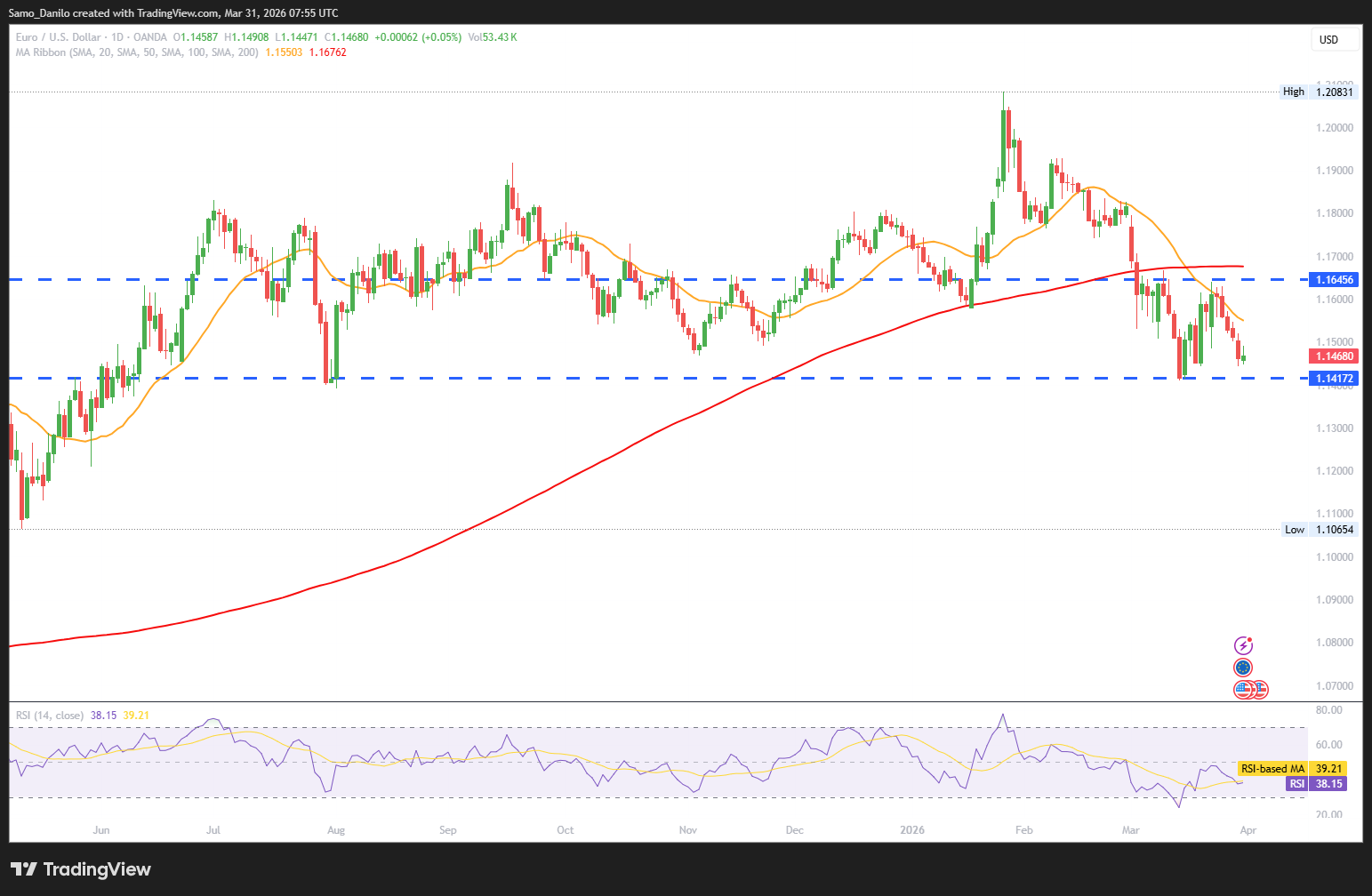
- EUR/USD Price: The EUR/USD edges higher toward 1.1470 after five consecutive days of losses. The modest rebound suggests some short-term stabilization, though upside momentum remains limited.
- Geopolitical news: Reports, including from the The Wall Street Journal, indicate that Donald Trump is open to ending the Middle East conflict. This improves risk sentiment and reduces safe-haven demand for the US Dollar, offering mild support to the Euro.
- French inflation: Data from INSEE showed France’s CPI rising to 1.7% y/y, above expectations. Higher inflation, driven by energy costs, may reinforce expectations for a more hawkish stance from the ECB, supporting the Euro.
- Energy response: European policymakers are stepping up coordination efforts to manage energy market disruptions. Joint actions by EU energy ministers aim to mitigate the inflationary impact of the Iran-related supply shock, which remains a key driver for the currency.
- Eurozone inflation: Markets are closely watching the upcoming Eurozone HICP release, which will provide crucial signals for monetary policy expectations. A stronger reading could further boost rate hike bets and lend additional support to the Euro.
| SMA (20) | Falling |  | |
| RSI (14) | Falling | | |
| MACD (12, 26, 9) | Falling | | |
Closing statement: EUR/USD is attempting a modest recovery as easing geopolitical tensions and rising Eurozone inflation offer support, but the broader outlook remains sensitive to energy prices and upcoming inflation data.
GBPUSD
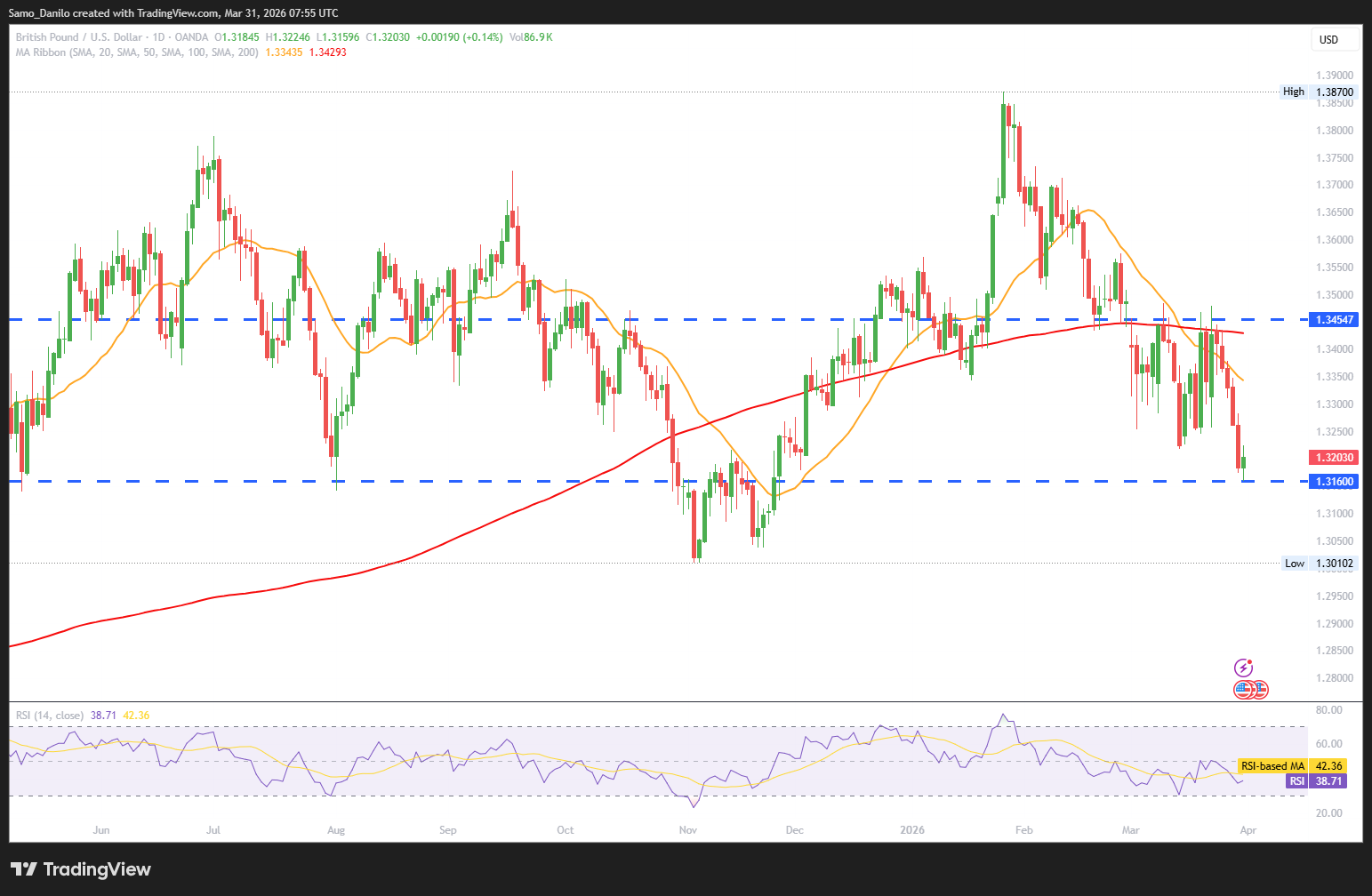
- GBP/USD Price: The GBP/USD is stabilizing just below the 1.3200 level after recent gains. Despite the rebound, the pair is struggling to build stronger upside momentum, indicating cautious market sentiment.
- Housing data: Data from Nationwide Building Society showed house prices rising by 0.9% m/m in March, far exceeding expectations. This marks the strongest monthly increase since late 2024 and signals resilience in the UK housing market.
- BoE signals: The Bank of England has hinted at a possible rate hike as early as April due to persistent inflation risks. While supportive for the Pound in theory, tighter monetary policy raises concerns about slowing economic growth.
- Fed's Williams: John Williams, President of the New York Fed, noted that US monetary policy is well-positioned but acknowledged mixed signals from the labor market. This uncertainty limits clear directional bias for the US Dollar.
- US data: Markets are eyeing key US indicators, including JOLTS Job Openings and consumer confidence data from the Conference Board. These releases could shape near-term USD direction and influence the pair.
| SMA (20) | Falling | | |
| RSI (14) | Falling | | |
| MACD (12, 26, 9) | Falling | | |
Closing statement: GBP/USD is holding onto modest recovery gains, supported by strong UK data, but faces headwinds from hawkish BoE policy risks and uncertain US economic signals, keeping the outlook cautiously balanced.
XAUUSD
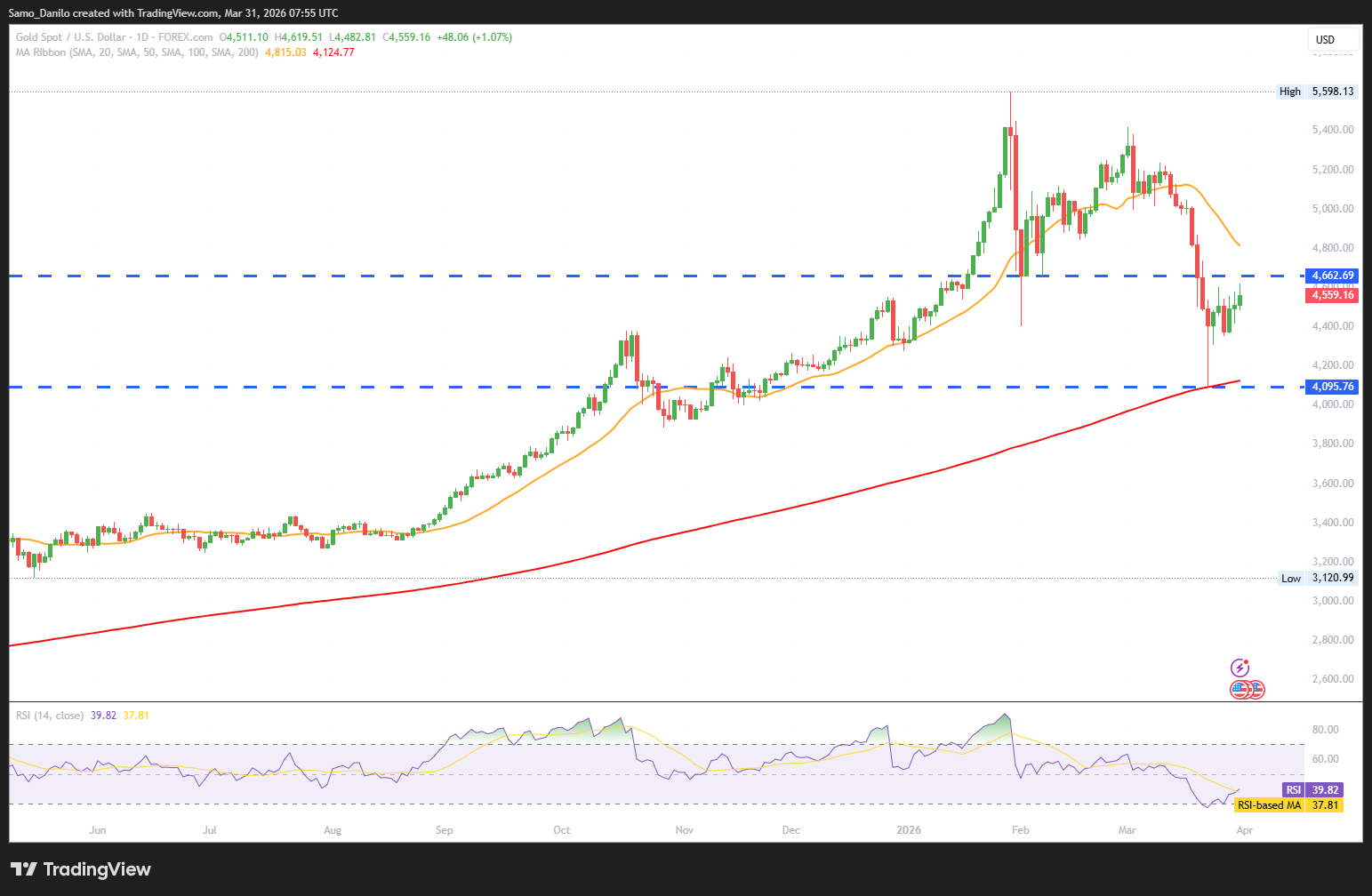
- XAU/USD Price: The XAU/USD failed to hold above the $4,600 mark after reaching a one-and-a-half-week high during the Asian session. This pullback suggests fading bullish momentum despite recent strength.
- Geopolitical tensions: Ongoing uncertainty surrounding the Iran conflict, including reluctance to engage in direct talks with the US and continued military deployments, keeps safe-haven demand for Gold supported, limiting deeper downside moves.
- Fed's Powell: Jerome Powell emphasized that long-term inflation expectations remain anchored despite geopolitical risks. He also highlighted that the Federal Reserve has flexibility to assess the economic impact before adjusting policy.
- Rate expectations: Markets are now pricing in more than a 50% probability of a rate hike by the Fed in 2026. This has pushed the US Dollar to fresh highs, creating headwinds for non-yielding assets like gold.
- CB commentary: A series of speeches from both the European Central Bank and the Federal Reserve could provide further direction. Any hawkish signals may strengthen the USD and pressure gold further.
| SMA (20) | Falling | | |
| RSI (14) | Falling | | |
| MACD (12, 26, 9) | Falling | | |
Closing statement: Gold remains caught between geopolitical support and rising rate expectations, with USD strength limiting upside potential and keeping the near-term outlook cautiously bearish.
CRUDE OIL
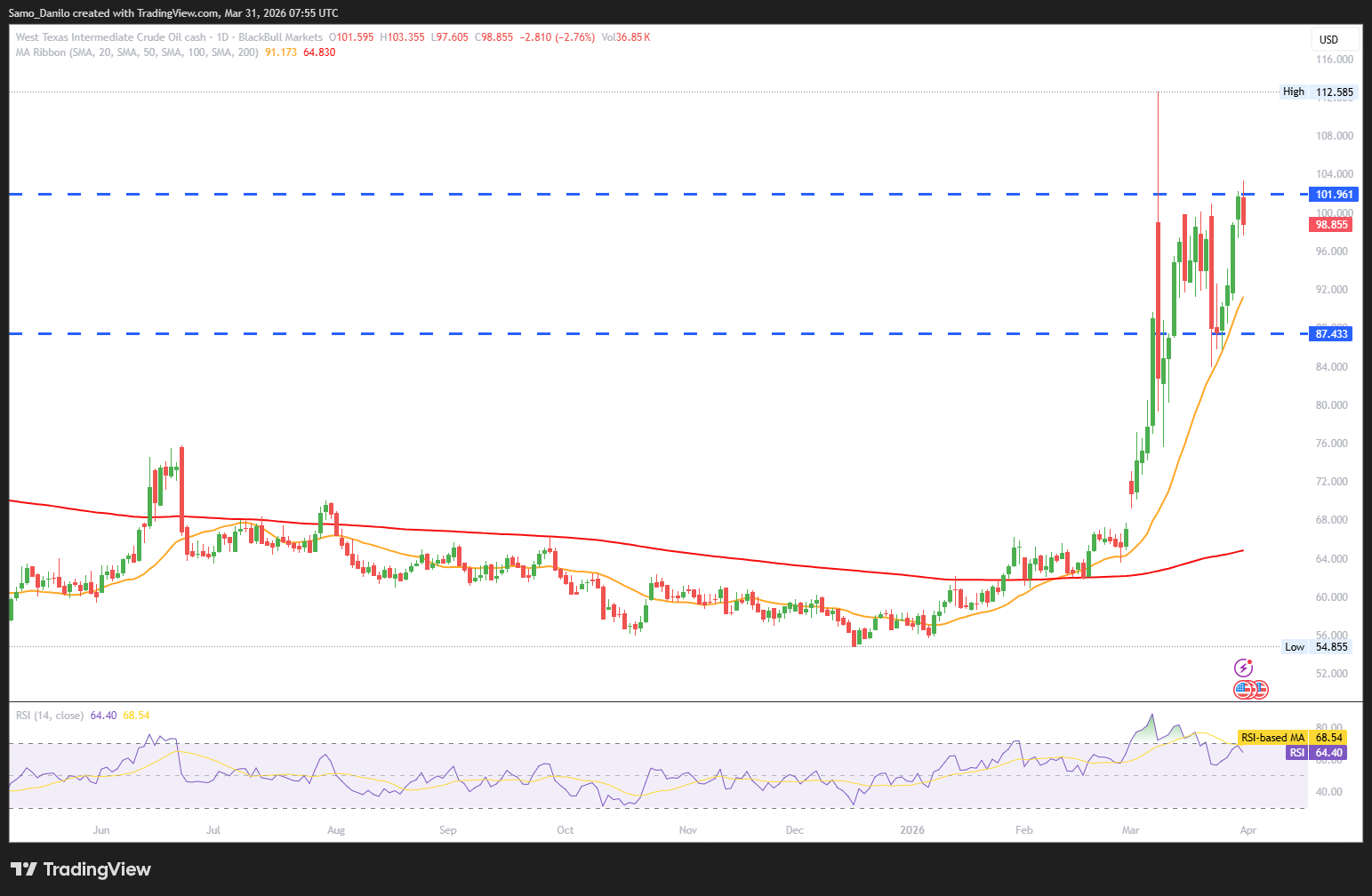
- Crude Oil Price: The WTI crude oil has snapped its four-day winning streak, trading near $99.70 per barrel. The pause comes after a sharp rally, suggesting some profit-taking while prices remain elevated.
- Strait of Hormuz: Iran’s plan to impose tolls and restrict access in the Strait of Hormuz marks a significant escalation. Given the strait’s critical role in global oil flows, any disruption raises serious supply concerns and supports higher prices.
- Supply fears: Reports of Iranian strikes on a Kuwaiti tanker and increased activity from Iran-backed Houthis highlight growing threats to shipping routes. The risk of broader disruptions across the Persian Gulf and Red Sea continues to underpin bullish sentiment.
- Fuel prices: According to GasBuddy data cited by Reuters, US gasoline prices have surged above $4 per gallon for the first time in over three years. This reflects tightening supply conditions and geopolitical-driven price pressures.
- China demand: Stronger-than-expected PMI data from China, with manufacturing rising to 50.4, signals improving demand from the world’s largest oil importer. This adds a fundamental bullish factor alongside geopolitical risks.
| SMA (20) | Rising |  | |
| RSI (14) | Rising | | |
| MACD (12, 26, 9) | Rising | | |
Closing statement: Oil remains supported by escalating geopolitical tensions and improving demand signals, though short-term consolidation may persist after the recent rally.
DAX
- DAX 40 Price: The DAX climbed 1.26% to above 22,700 points during the European session. The move suggests resilience in equities despite rising inflation and mixed economic data.
- German inflation: German CPI accelerated to 2.7% in March, with the HICP at 2.8% y/y, driven בעיקר by a sharp 7.6% surge in energy prices linked to the Iran conflict. This marks the highest inflation level since early 2024 and reinforces stagflation concerns.
- Import prices: While monthly import prices rose modestly by 0.3%, they remain 2.3% lower on a yearly basis. This indicates that external price pressures are still relatively contained despite recent energy-driven spikes.
- Retail sales: Data from Destatis showed retail sales fell by 0.6% in February, missing expectations. The weak reading, combined with negative revisions, highlights fragile consumer demand even before the full impact of the geopolitical crisis.
- Price expectations: The European Commission survey points to a sharp increase in industrial selling price expectations, signaling that inflationary pressures may broaden in the coming months, while services remain stable.
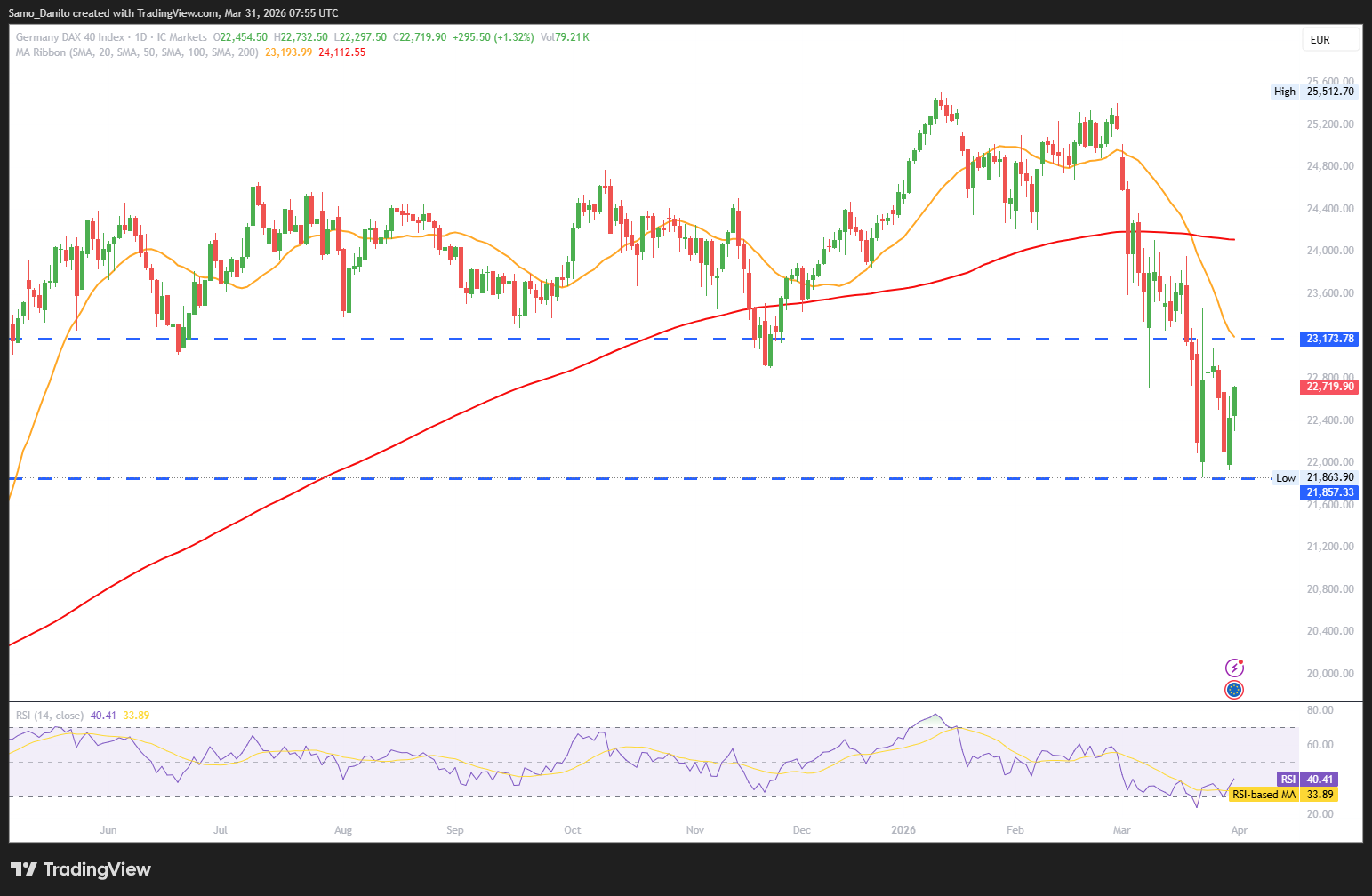
| SMA (20) | Falling | | |
| RSI (14) | Falling | | |
| MACD (12, 26, 9) | Falling | | |
Closing statement: The DAX is showing short-term strength, but rising inflation and weak consumption paint a challenging macro backdrop, increasing the risk of volatility ahead.